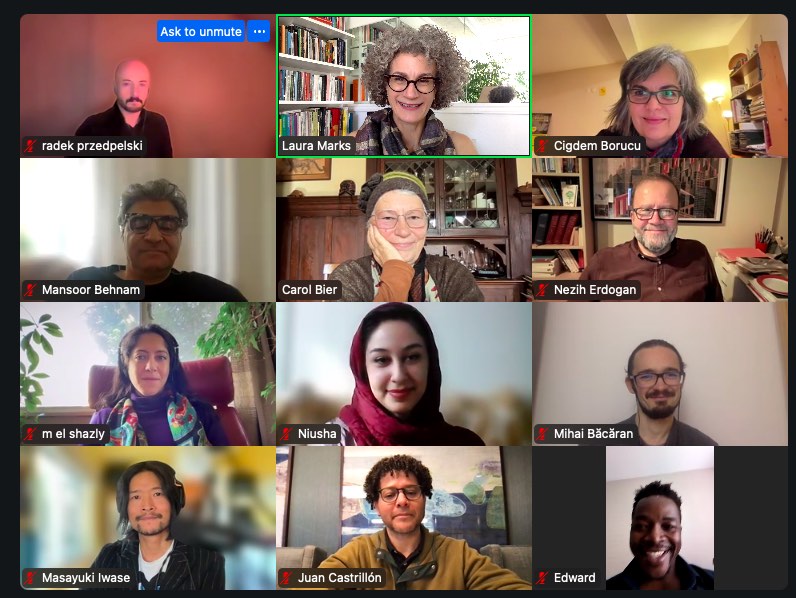
Amazing Meeting of February 28, 2025
On February 28, 2025, SMRN held another engaging meeting with a wonderful group of members, including Laura Marks, Radek Przedpełski, Çigdem Borucu, Mansoor Behnam, Carol Bier, Nezih Erdoğan, Mena El Shazly, Niusha Hatefinia, Mihai Băcăran, Masayuki Iwase, Juan Castrillón, and Edward Sembatya.
During the meeting, our friend Nezih Erdoğan shared his insightful research on revisiting the cinematic apparatus through Tamás Waliczky’s 2019 exhibition of imaginary cameras. Following that, Laura Marks introduced her four-year plan for Talismanic Small-File Media, outlining its relevance to SMRN and inviting reflections on potential collaborations.
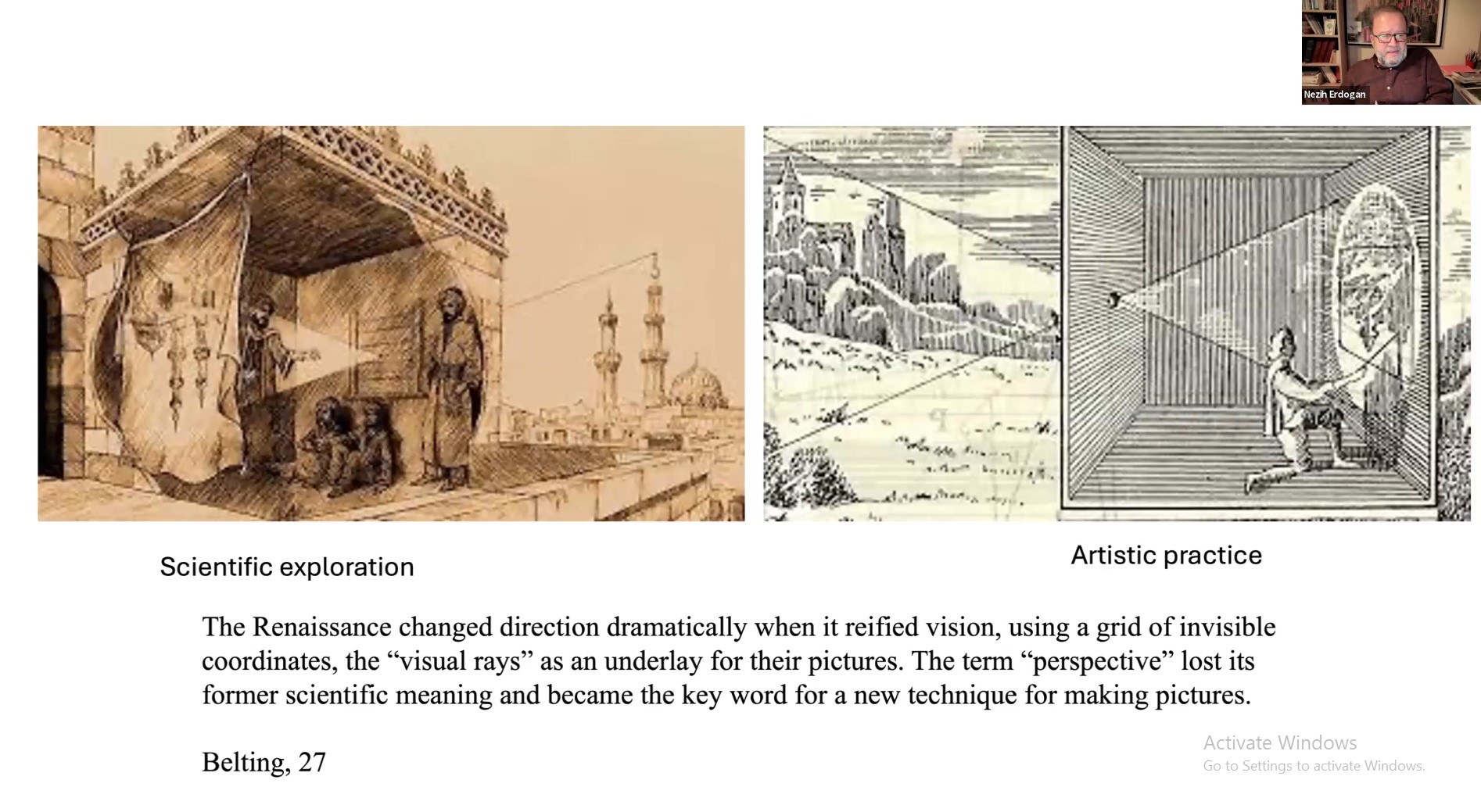
In the first part of the meeting, Nezih Erdoğan presented his research, "From al-Bait al-Muzlim to Waliczky's Imaginary Cameras: Revisiting the Apparatus," which examined the evolution of visual perception and its implications for cinema. He began by revisiting the origins of the camera obscura through the work of Ibn al-Haytham, whose theories on light and vision marked a significant departure from earlier Greek thought. While al-Haytham is often credited with inventing the camera obscura, Erdoğan emphasized that he did not use it to produce perspective-based images, highlighting a key distinction in the history of optical theory. Erdoğan then traced the Western development of vision, drawing on Jonathan Crary’s argument that the 19th century saw a shift back to the subject as the origin of vision. He connected this to film theory through the ideas of Hugo Münsterberg and Christian Metz, who explored how the cinematic apparatus organizes perception and structures the viewer’s engagement with the screen.
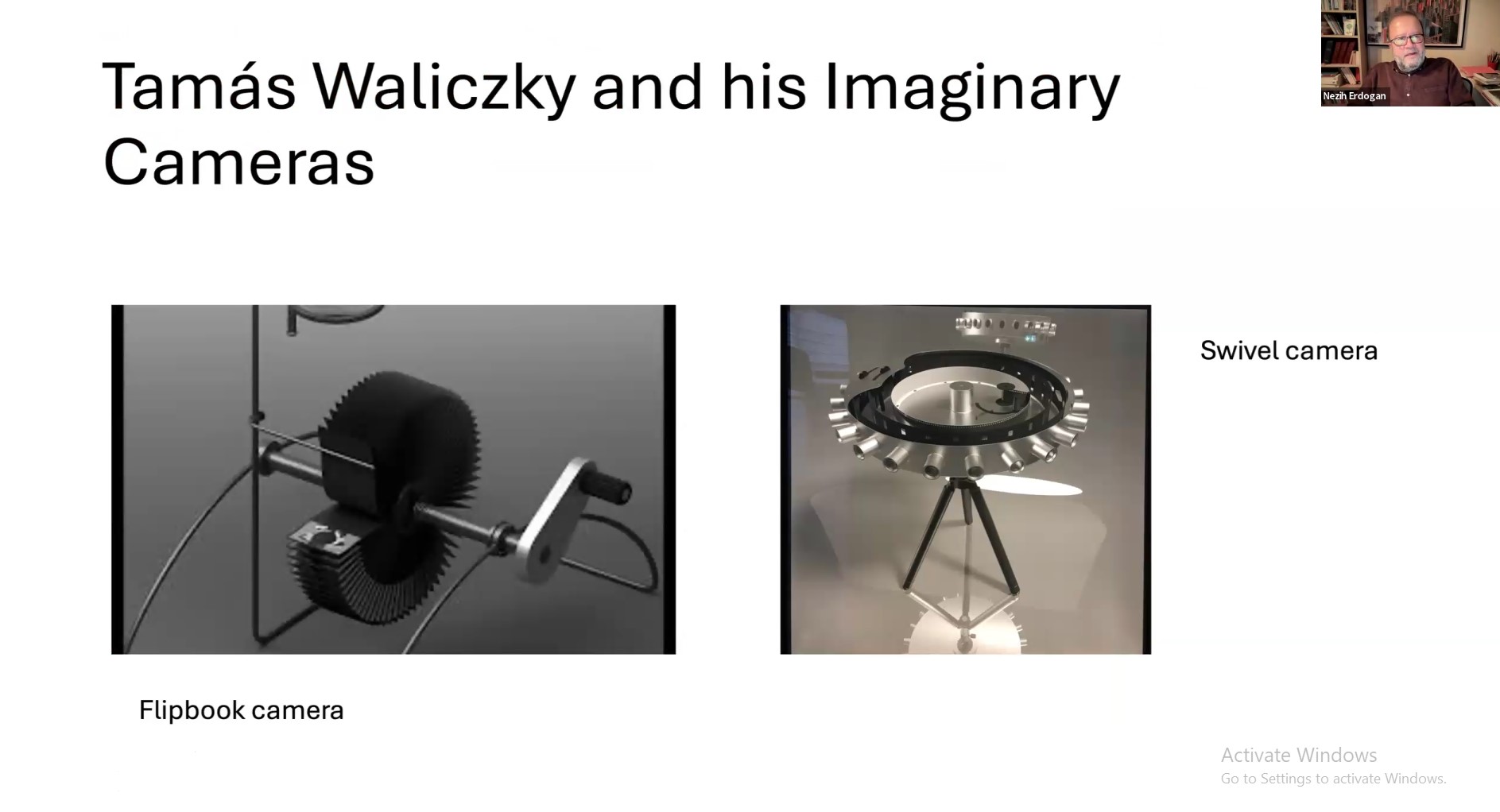
Building on these insights, Erdoğan examined how certain filmmakers, like Yasujirō Ozu, resisted dominant Western modes of representation by employing alternative framing and visual strategies. He concluded with a discussion of Tamás Waliczky’s 2019 exhibition of imaginary cameras, which proposes fictional optical tools that challenge traditional spatial representation. These imaginative designs, Erdoğan argued, open up new possibilities for rethinking the cinematic apparatus and the ways in which visual perception can be structured on screen.
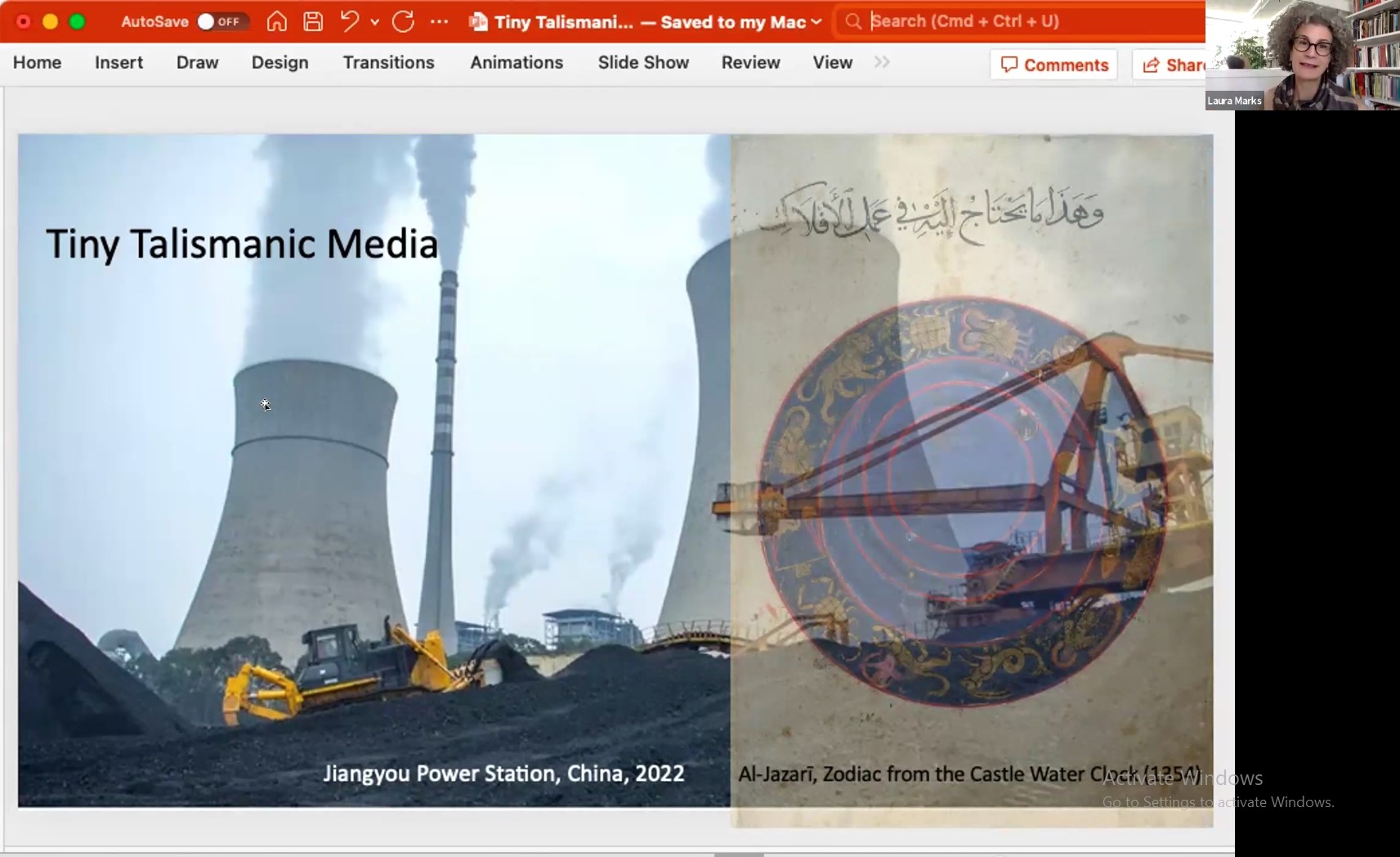
In the second part of the meeting, Laura Marks shared a four-year plan for Talismanic Small-File Media, a project focused on addressing the environmental impact of digital technologies, especially streaming media and AI. She introduced three central themes: micro-cosmic media, apotropaic media, and neo-geomancy. These concepts aim to inspire low-energy, culturally grounded alternatives to current high-impact digital practices. The project invites collaboration between SMRN, her research team on AI and environmental impact, the Small File Media Festival, and international media makers working in regions with precarious infrastructure.
Among the project’s key goals are the development of a pixel-squishing app for small-file movies, the creation of tiny language and image models with minimal energy requirements, and the exploration of traditional divination and cultural practices as alternatives to resource-intensive technologies. Laura emphasized the urgency of questioning corporate tech solutions, reducing the digital carbon footprint, and supporting small-scale, diverse media practices as ecological and anti-imperial responses to dominant systems. Her talk sparked an engaging and thoughtful discussion among SMRN members.
Comments