Fascinating Meeting of November 30, 2025
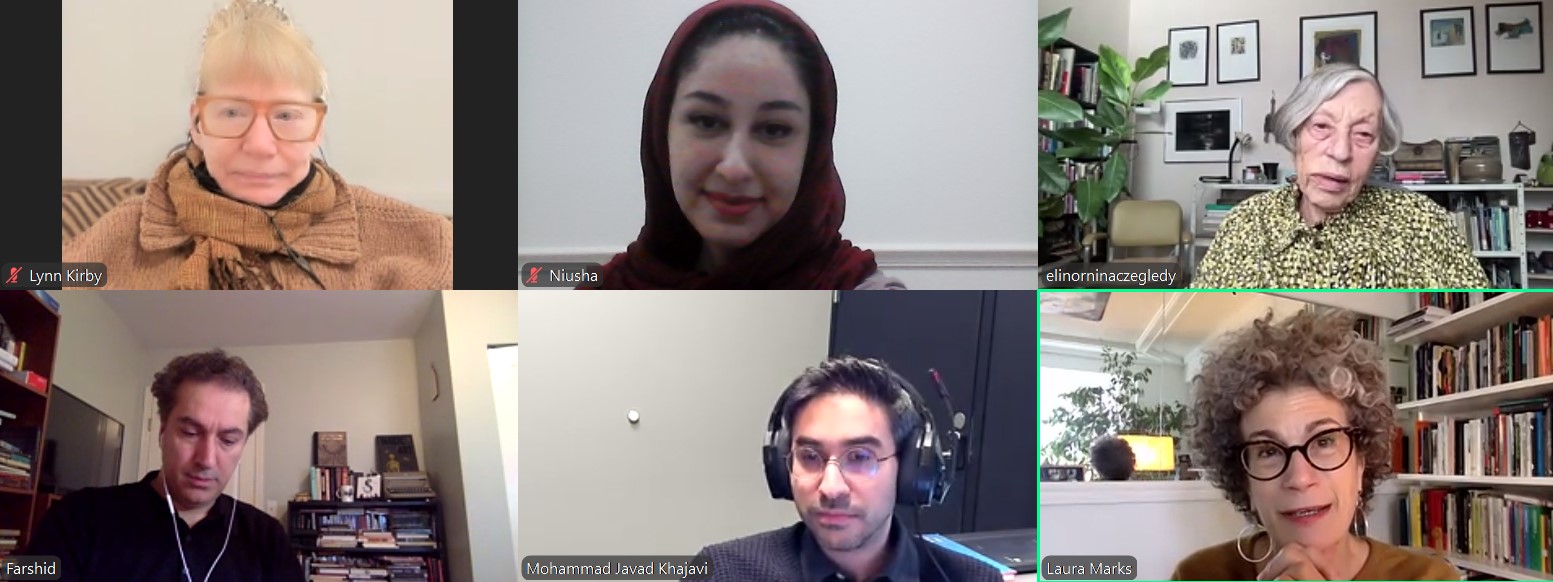
On November 30, 2025, SMRN held another warm and engaging meeting with members including Farshid Kazemi, Lynn Kirby, Niusha Hatefinia, Nina Czegledy, Laura Marks, Mohammad-Javad Khajavi, and Maure Coise.
During the meeting, Mohammad-Javad Khajavi presented his project, “AI-Assisted Creative Tools: Balancing Innovation, Craft, and Environmental Responsibility.” This was followed by Maure Coise’s presentation, “Exile for Lovers: Blue in Two Bachtyar Ali Novels,” which explored the significance of the color blue in two Kurdish novels by Bachtyar Ali.
In the first presentation, Mohammad-Javad Khajavi explained that he and his team have developed an environmentally responsible, AI-assisted tool trained entirely on original data to create user-defined custom motiongraphy. The presentation outlined the research behind this innovation and addressed the ethical and environmental considerations of developing AI-assisted creative tools. It also included a preview of the platform’s beta version ahead of its public launch, offering SMRN members an early glimpse of the platform.
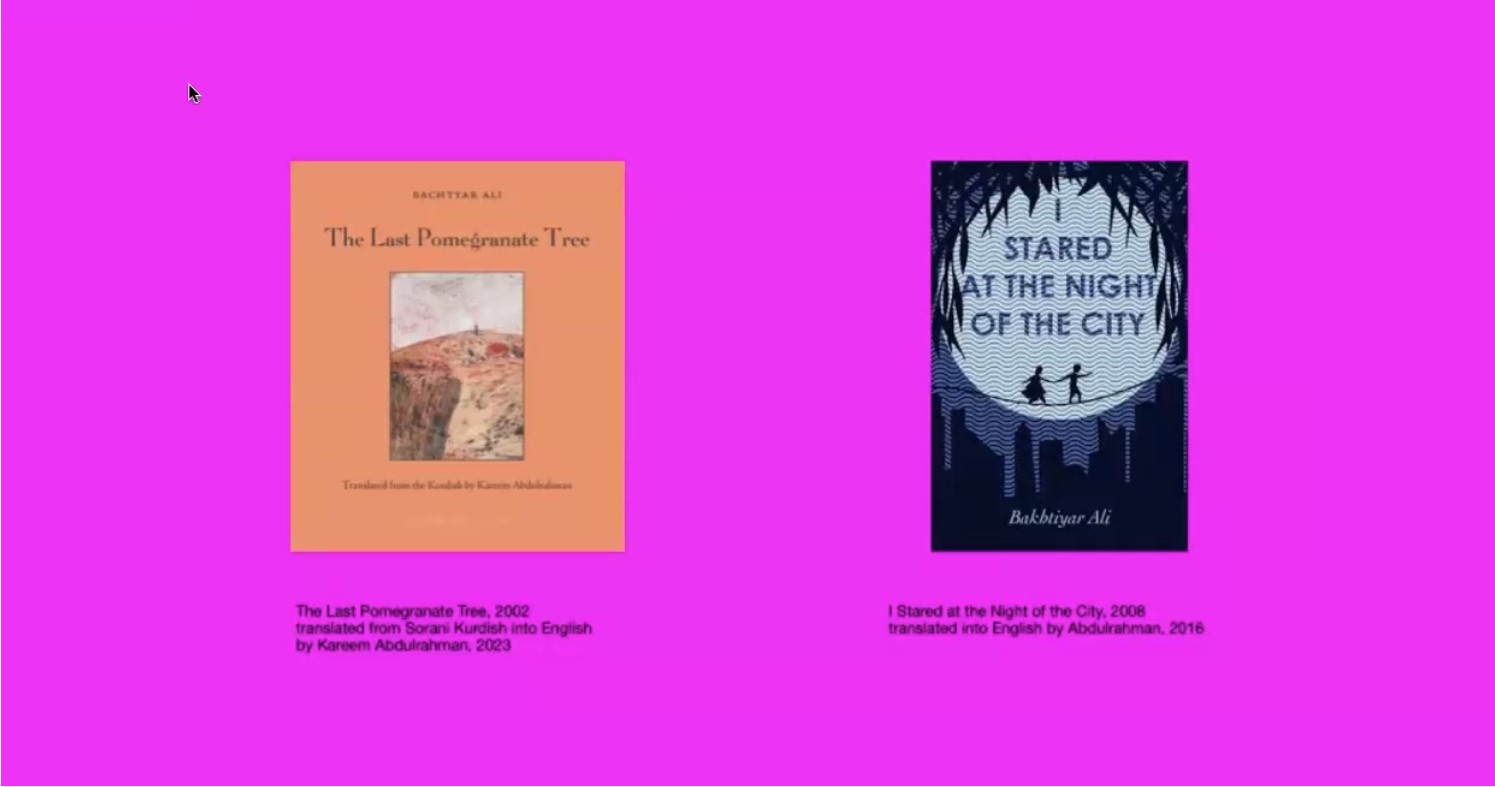
In the last part of our meeting, Maure Coise’s presentation focused on Bakhtiar Ali as a contemporary Kurdish novelist, exploring his work through illuminationist (ishraqi) metaphysics and a philosophy of imaginative love. With particular emphasis on the color blue, Coise examined its role as a key to understanding Ali’s novels The Last Pomegranate Tree and I Stared at the Night of the City. Coise explained that in these works, blue objects and spaces (a blue cart, a blue folder of letters, a blue-lit room of a murder) function as liminal zones at the threshold between reality and imagination. These elements articulate what they described as “light differentiation,” expressed through varying degrees of transparency and translucency. Drawing on a form of “literary grounded theory,” Coise systematically tagged references to light and color, diagrammed their relationships, and approached the novels as “empirical data points” to identify recurring patterns of love, mourning, exile of light, and imaginative objects.
The presentation also highlighted how love in Ali’s novels is deeply entangled with Kurdish history and trauma, particularly the 1988 genocide and forced migration. However, as scholars such as Choman Hardi and Baris Majeed suggest, these works resist merely reproducing violence. Instead, they stage forms of phantomic love (less agentive than ghostly) and employ apostrophic shifts in address that complicate direct reader identification.
Finally, Coise connected Ali’s use of color and imagination to Suhrawardi’s Ishraqi philosophy, as well as to the idea of the “living archive.” In this framework, the novels both preserve stories and transform them through each reader’s relational engagement. Diagramming, in this sense, becomes a method of “thinking with” rather than “about” the texts, mirroring the polysemous, unstable, and distributed nature of imaginative love.
Comments