Illuminating Meeting of May 30, 2024
On May 30, 2024, SMRN held another warm meeting with a group of members, including J.R. Osborn, Çigdem Borucu, Niusha Hatefinia, Pantea Karimi, Mehvish Rather, Juan Castrillon, Masayuki Iwase, Radek Przedpełski, and Laura Marks.
During the meeting, our friend Masayuki, along with three other speakers—Radek, Juan, and Joff Bradley—presented their research. This was a concise version of their presentation panel, "Chaosmotechnics: Sound, Cosmos, and Noise," which they will present at the DGS conference in Delft, NE, in July. Their presentation explored the multiplicity of ahuman intelligences created through deterritorializing practices of sound making.
As Joff was not able to be present at the meeting, Masayuki did the presentation on his behalf. This presentation, titled "Sonic Méta-Dissonance of the Tinguely-Ichiyanagi Contraption," revolved around Jean Tinguely’s kinetic sculptures, Guattari's fascination with Tokyo, and the avant-garde music of Japanese composer Toshi Ichiyanagi. Joff's paper explored how these elements merge sonically and ambiently, examining the end of the world and the chaos of contemporary Japanese capitalism through Guattari’s ecosophy. The presentation also highlighted Tinguely’s Méta-Harmonies, with their unique sounds and materials, and discussed their insights into play, inhuman dissonance, cosmic assemblages, and the interplay between sound and chaos. It concluded by suggesting that Tinguely's 'spiral' offers a contrasting image to the disaster of Japanese capitalism.
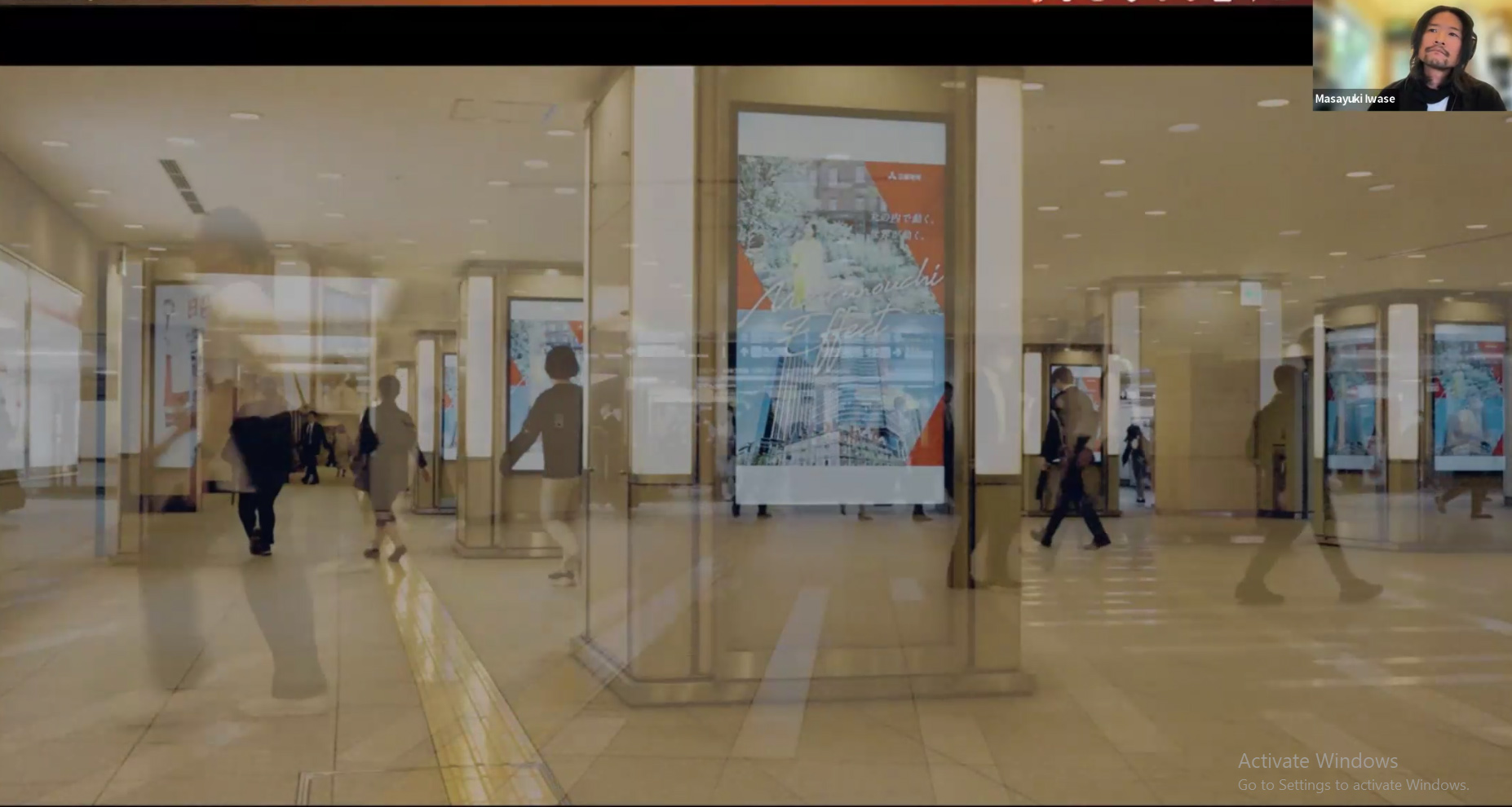
Then, Masayuki began his presentation titled "Deleuze-Ozu Encounter: Polyphonic Cacophony and the Schizo Socius of Tokyo." His paper discussed Deleuzian ‘spiritual automation’ and Ozuesque ‘still life,’ concepts he explored in his short film "Autopoietic Veering Part 3: The Schizo Socius of Tokyo." The film examined the interplay between human and nonhuman lives in Tokyo's algorithmic era, drawing inspiration from Yasujirō Ozu's philosophy and Gilles Deleuze's ideas. It envisioned an open, untimely future and experimented with 'time-images' to create temporal ruptures in perception. By juxtaposing Tokyo's bustling cityscape with the tranquility of Kamakura, and using a blend of digitally calibrated sounds and natural murmurs, Masayuki's film generated complex visual and sonic experiences. These elements challenged memory and habits, highlighting the impact of nonhuman algorithmic intelligence.
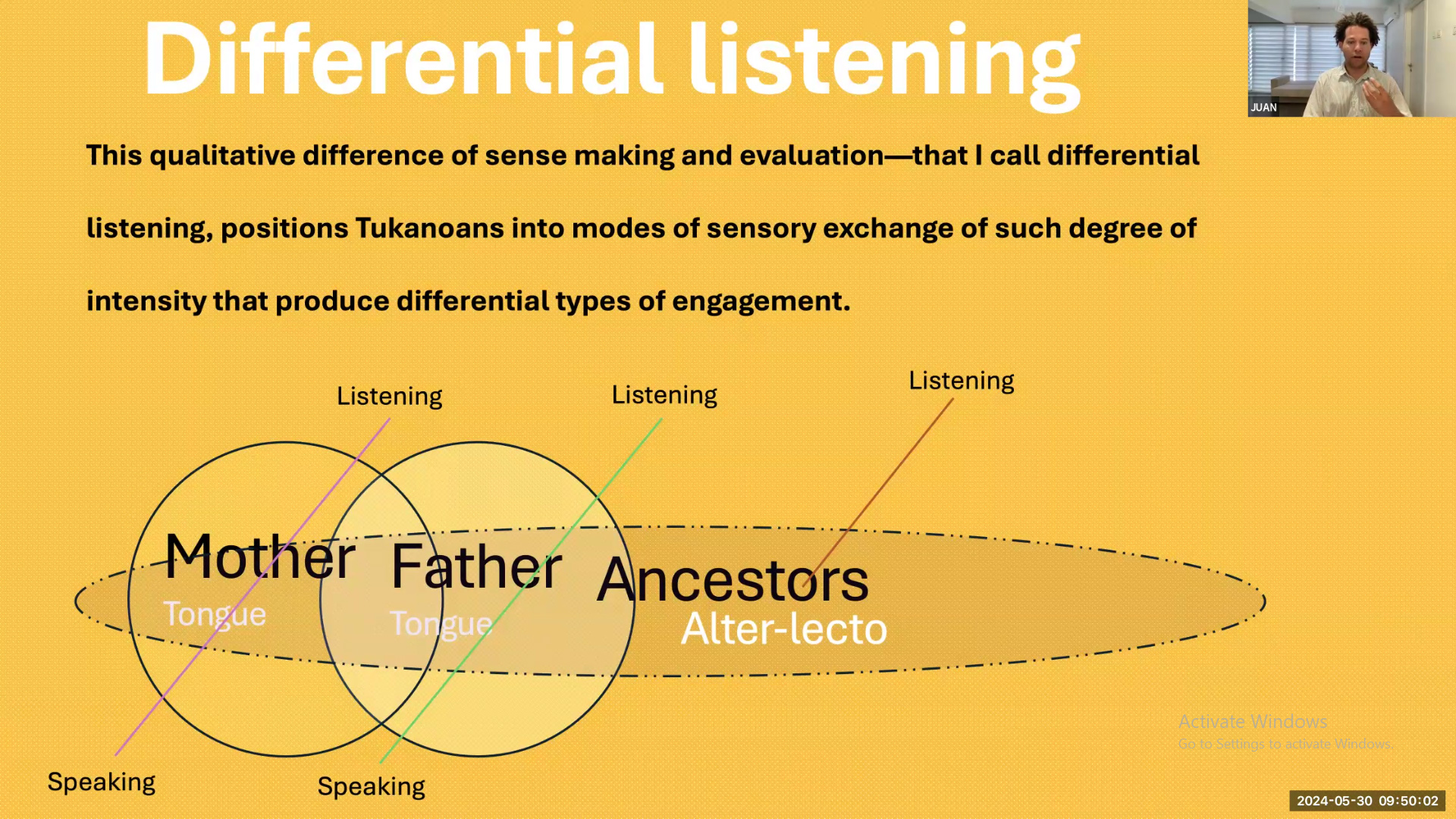
After that, Juan presented his paper titled "Differential Listening and Cinematic Detours in the Northwest Amazon." In this paper, he proposed the notion of differential listening, derived from his ethnomusicological study of mythical ancestors and powerful ritual instruments in the Colombian Amazon. He explained that differential listening involves modes of sensory exchange that create intense engagement among the Tukanoans. Juan elaborated on this concept through his in-progress short film about an indigenous woman who connects with the powerful noise of yuruparí underwater, highlighting how sound in Tukanoan lifeworlds is more significant than the physical objects themselves.
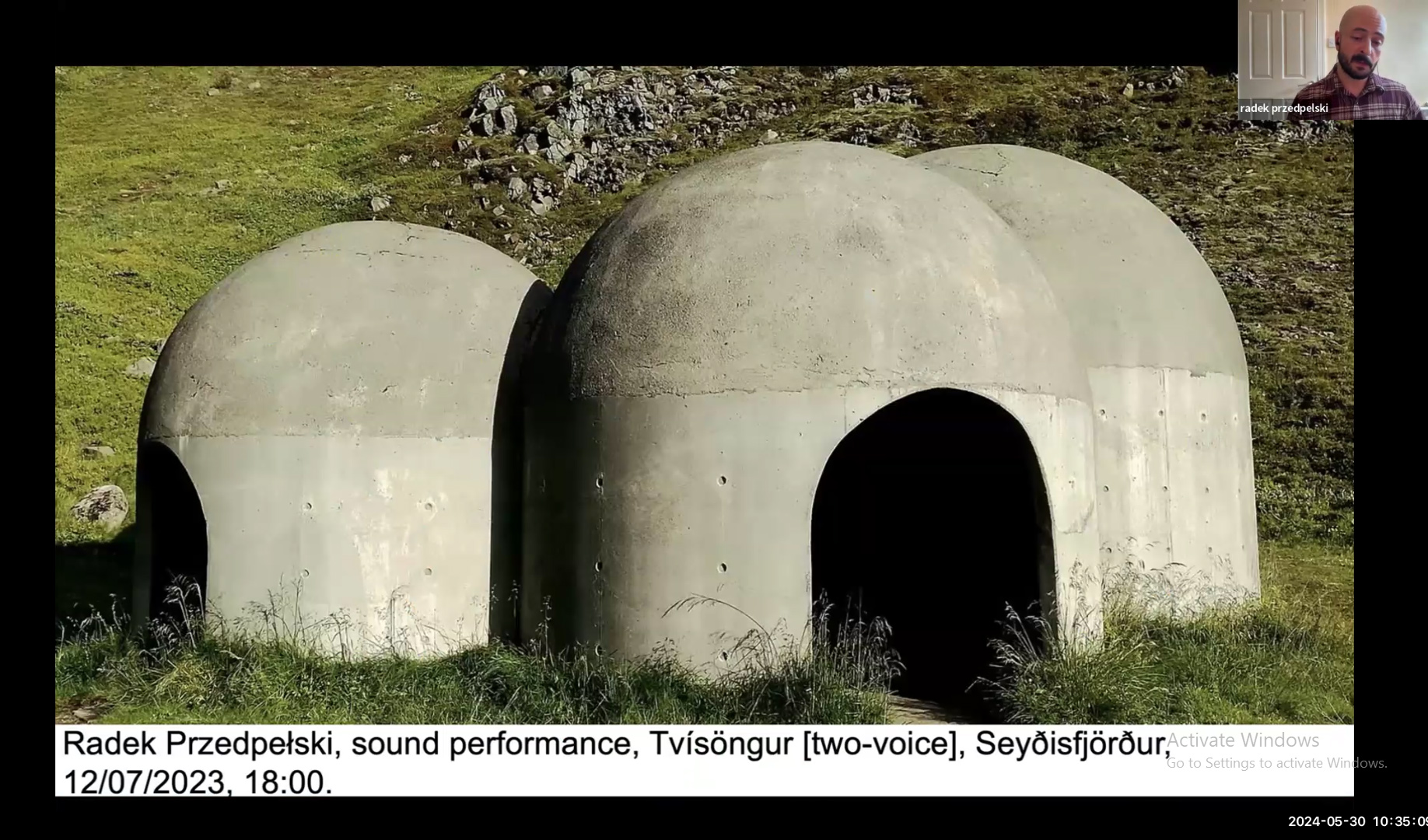
The last presentation was by Radek. His paper proposed the notion of "fibula-image," derived from the Deleuzoguattarian analysis of Early Iron Age metallic fibulas associated with Scytho-Siberian steppe nomadism in "A Thousand Plateaus." Radek used this concept to explore sustainable experimental multimedia practices in the Anthropocene. He elaborated on this idea through his art practice, which involves recording, collecting, and composing found sounds into site-specific performances. In these performances, the body becomes a site of timbre production, connected to its immediate cosmic environment through on-site sound production and overtone singing. He termed this mobile, on-site articulation of a nomadic cosmos-system as "chaosmotechnics."
Comments