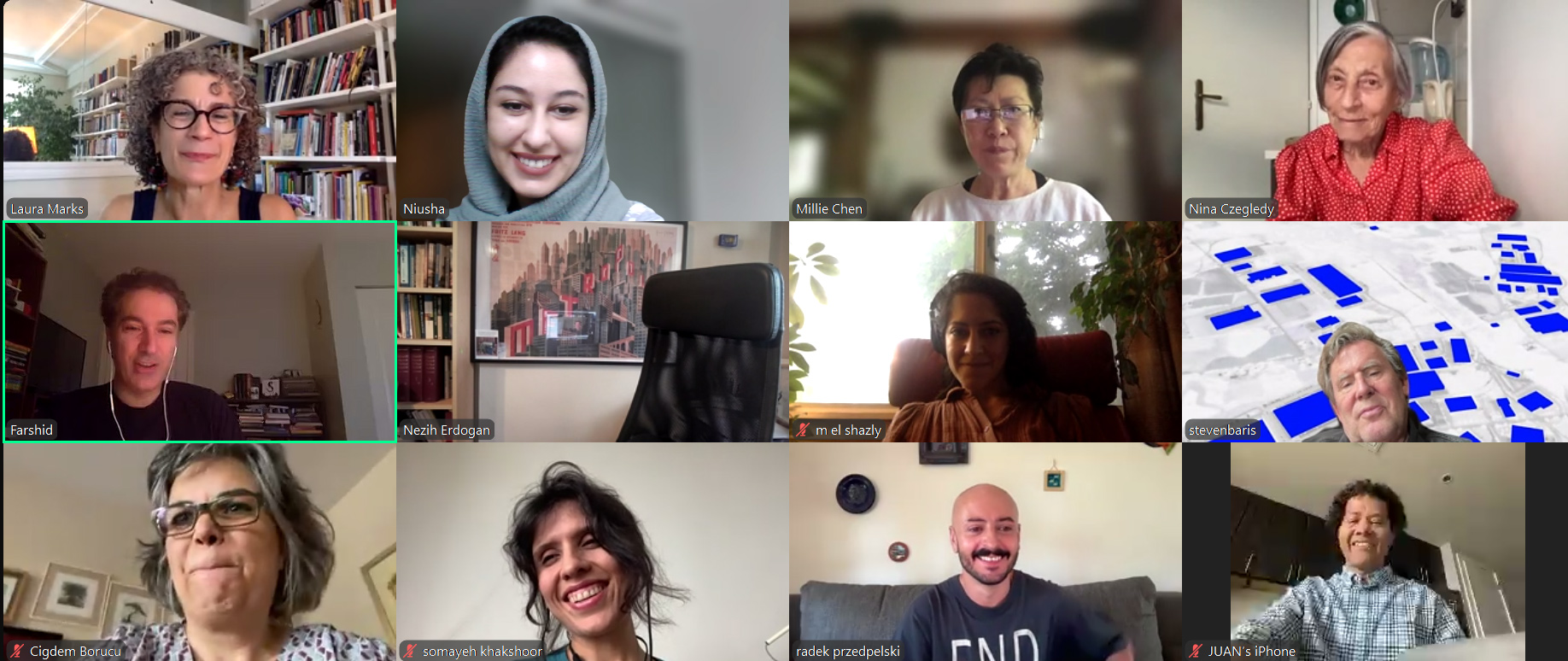
Inspiring Meeting of July 30, 2024
On July 30, 2024, SMRN hosted another warm and engaging meeting, bringing together members Mena El Shazly, Laura Marks, Millie Chen, Niusha Hatefinia, Nina Czegledy, Farshid Kazemi, Nezih Erdogan, Steven Baris, Cigdem Borucu, Somayeh Khakshoor, Radek Przedpelski, and Juan Castrillon.
The meeting featured inspiring presentations by Millie Chen and Laura Marks, who shared their recent projects and research.
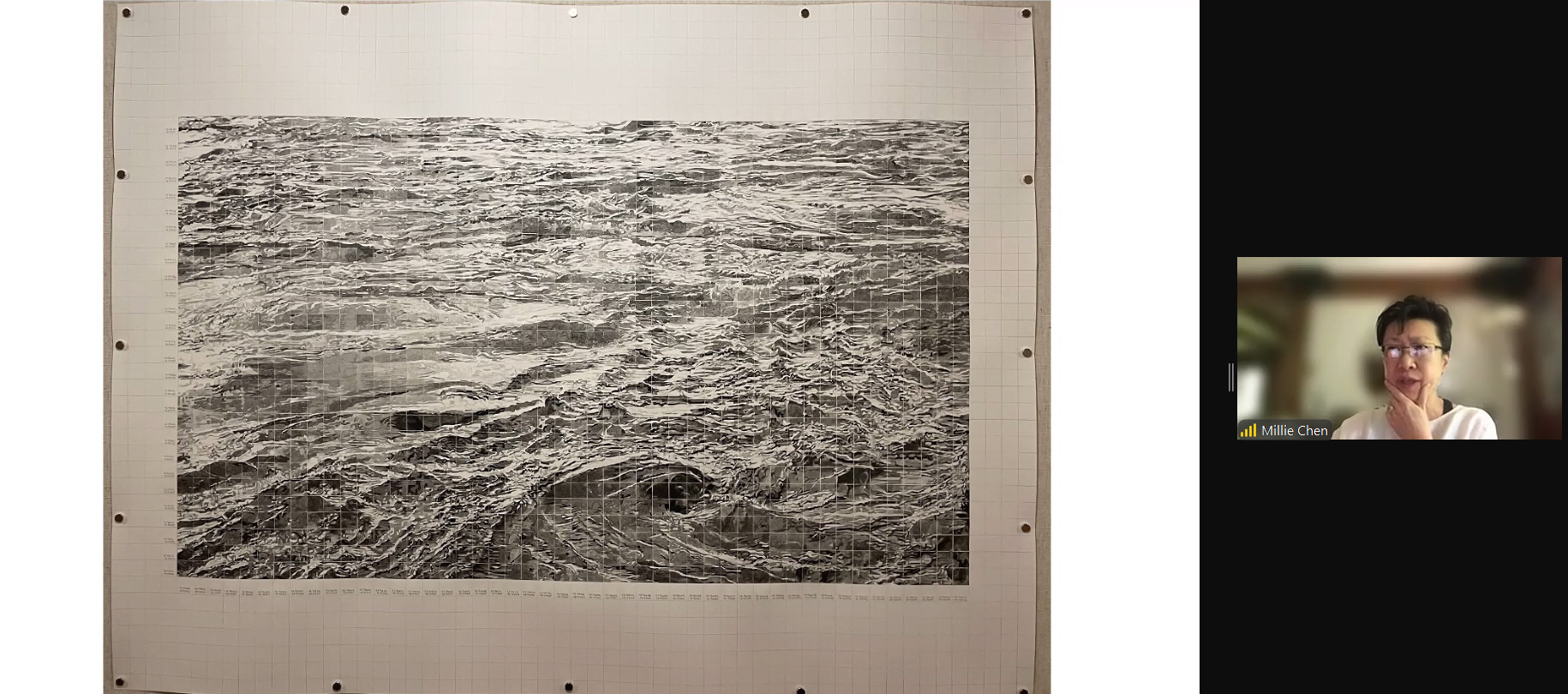
In the first part of the meeting, Millie Chen talked about her project, "Working within the Grid: Unpredictability and Limitlessness." She described her long-standing fascination with grids as a powerful framework in her art. By using grids, Millie explained, she can integrate singular elements into a unified structure where empty spaces become significant. This approach lets her blend control with unpredictability, embracing errors and “the wildness of being human” as part of the creative process. Through this lens, she explores themes of order, chaos, grief, and infinity. Millie shared works ranging from digital maps overlaid with personal artifacts to grief-driven drawings made from her mother’s makeup, as well as a series exploring the calming yet unsettling effects of repetitive patterns. Throughout, she highlighted the grid’s ability to navigate complex personal, historical, and conceptual themes.
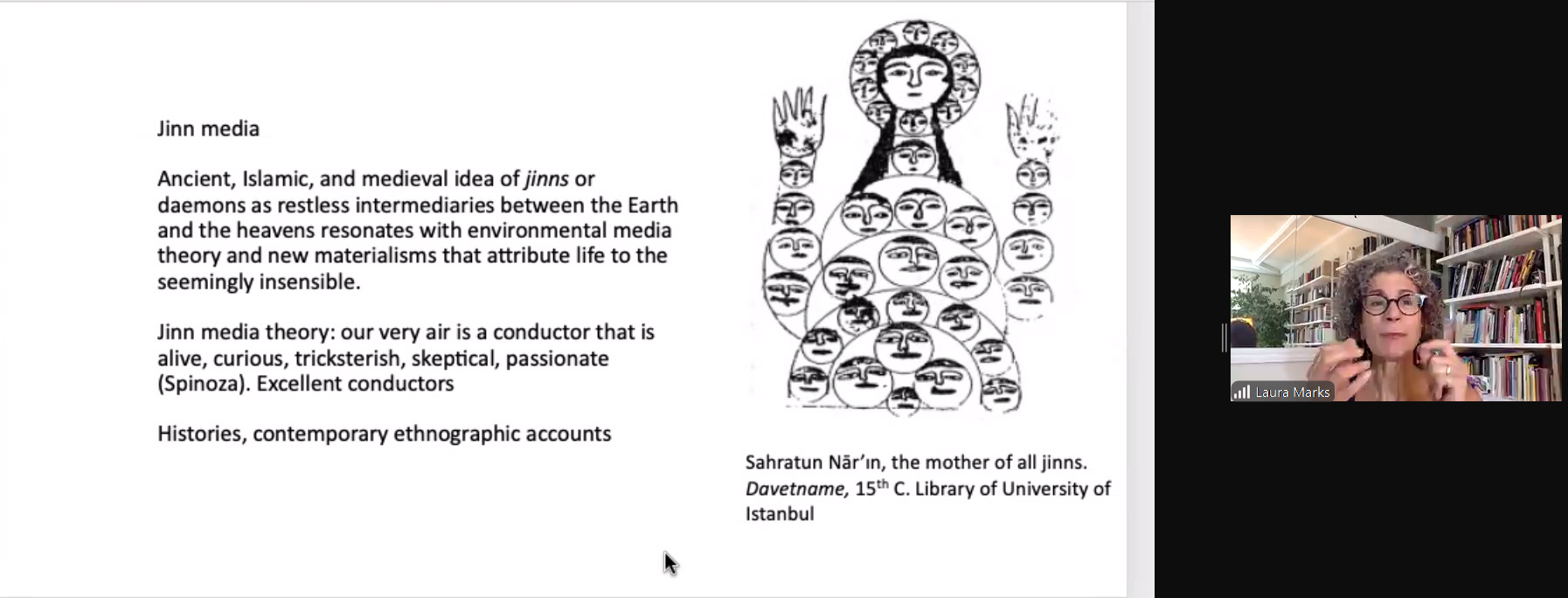
Following Millie’s presentation, Laura Marks shared her ongoing research on "Jinn Media," which is part of a larger exploration into the links between medieval talismanic magic and modern media. Laura introduced the concept of jinns, or spirits, as a unique form of media within Islamic traditions, acting as intermediaries between earthly and heavenly realms. With their long memories and “amoral wisdom,” jinns occupy an invisible, liminal space that is distinct from the imaginal realm. Laura discussed how this elusive quality, coupled with their trickster-like nature, grants them intriguing potential as media.
She drew fascinating connections between the conductive, metallic properties often associated with jinns and how certain materials in media theory are seen as conductive. Additionally, jinns’ deep, collective memories spanning pre-colonial and colonial histories enable them to mediate between various temporal realities. Laura also touched on their potential to challenge power structures, positioning jinns as “cosmic disruptors.” In this way, her work opens a window into understanding jinns as invisible but tangible beings with unique mediatic functions spatially, temporally, and even politically, shedding new light on the occult dimensions of media history and theory.
Comments