Inspiring SMRN Meeting of September 30, 2026
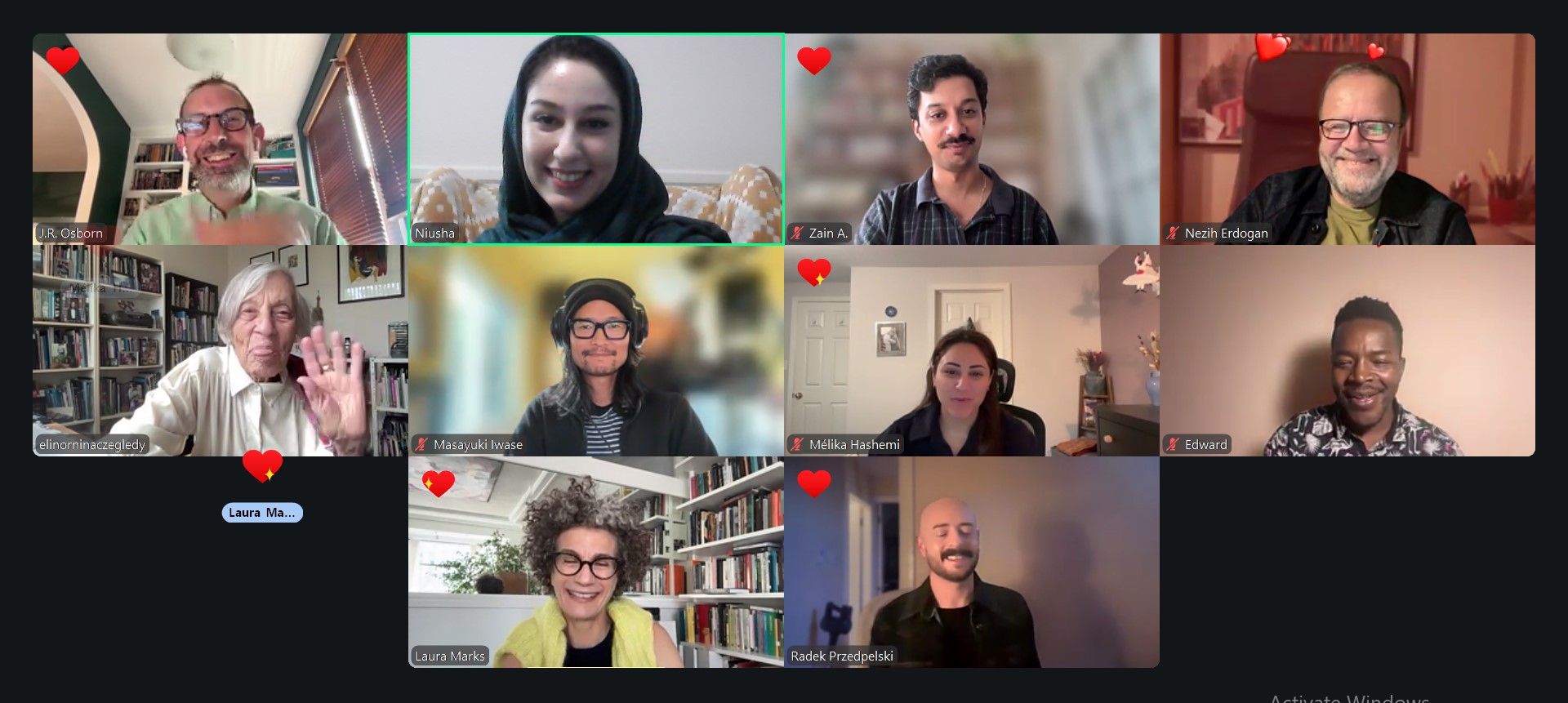
On September 30, 2026, SMRN held another engaging meeting with a wonderful group of members, including Melika Hashemi, Niusha Hatefinia, Laura Marks, Carol Bier, Zain Alam, Nina Czegledy, Nezih Erdoğan, Masayuki Iwase, Edward Sembatya, Radek Przedpełski, and J.R. Osborn.
The meeting featured presentations by Mélika Hashemi and Dr. J.R. Osborn, followed by lively discussions around digital materiality, spirituality, artistic practice, African visual culture, and future SMRN collaborations.
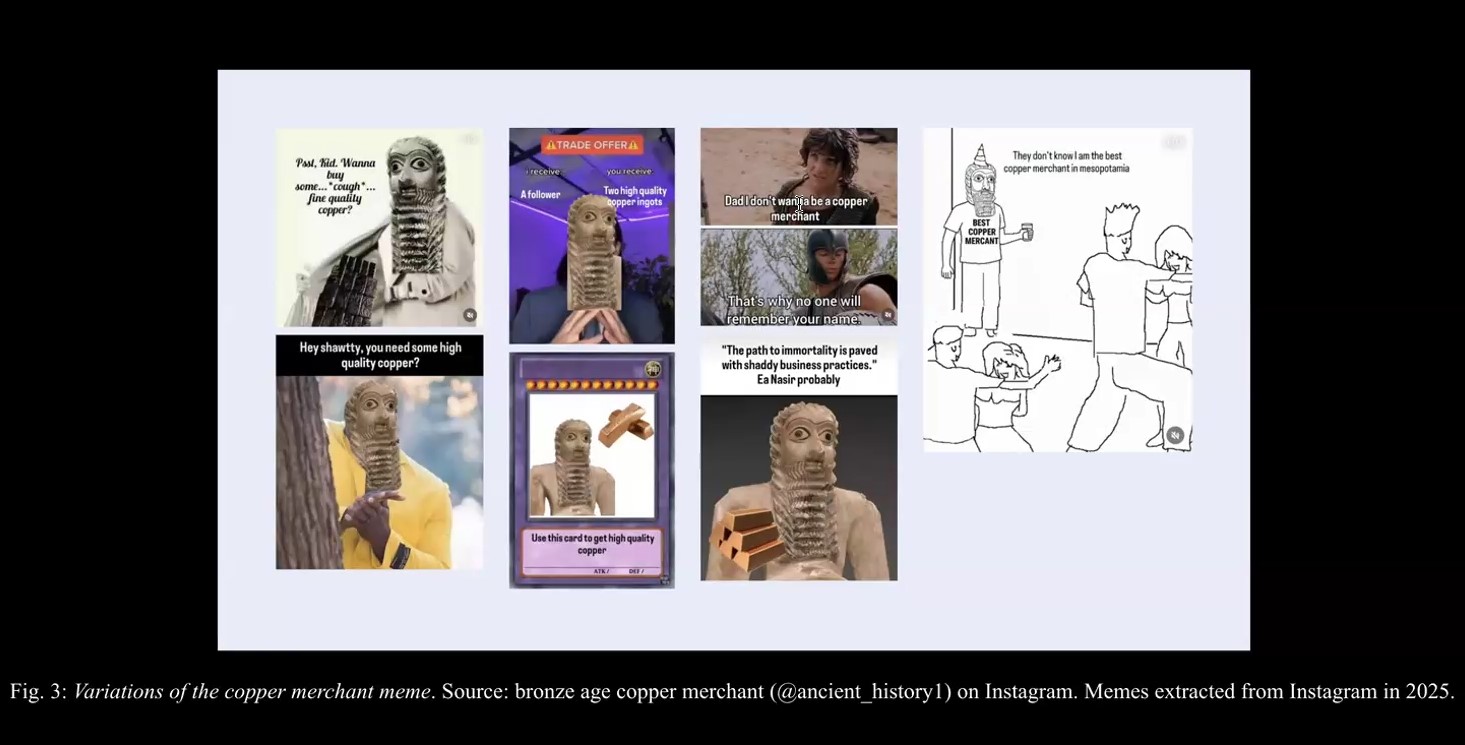
In the first part of the meeting, Mélika Hashemi presented “Not All Copper Turns to Gold: The Memeification of Ea-Nasir and Techno-Alchemical Metaphors for a Data-Driven World.” Her project examined the circulation of the Ea-Nasir meme and its transformation from a digital image into a physical object through 3D printing. Using copper, alchemy, and the 3D printer as central metaphors, Mélika explored the relationship between digital and material forms and the processes through which images and information acquire new meanings as they move across different media. She also connected these questions to contemporary data culture, considering data extraction, privacy, digital colonialism, and the environmental consequences of digital infrastructures.
The discussion expanded on the relationship between technology, materiality, and human intention. Members considered whether technologies such as 3D printers can be understood as active participants in processes of transformation, while also emphasizing the distinction between technological processes and human intentionality. The conversation also addressed digital spirituality, embodiment, humor, and the physical realities underlying seemingly immaterial digital technologies. Participants were particularly interested in how imperfections, glitches, and transformations in the 3D-printing process might challenge ideas of technological efficiency and finished products.
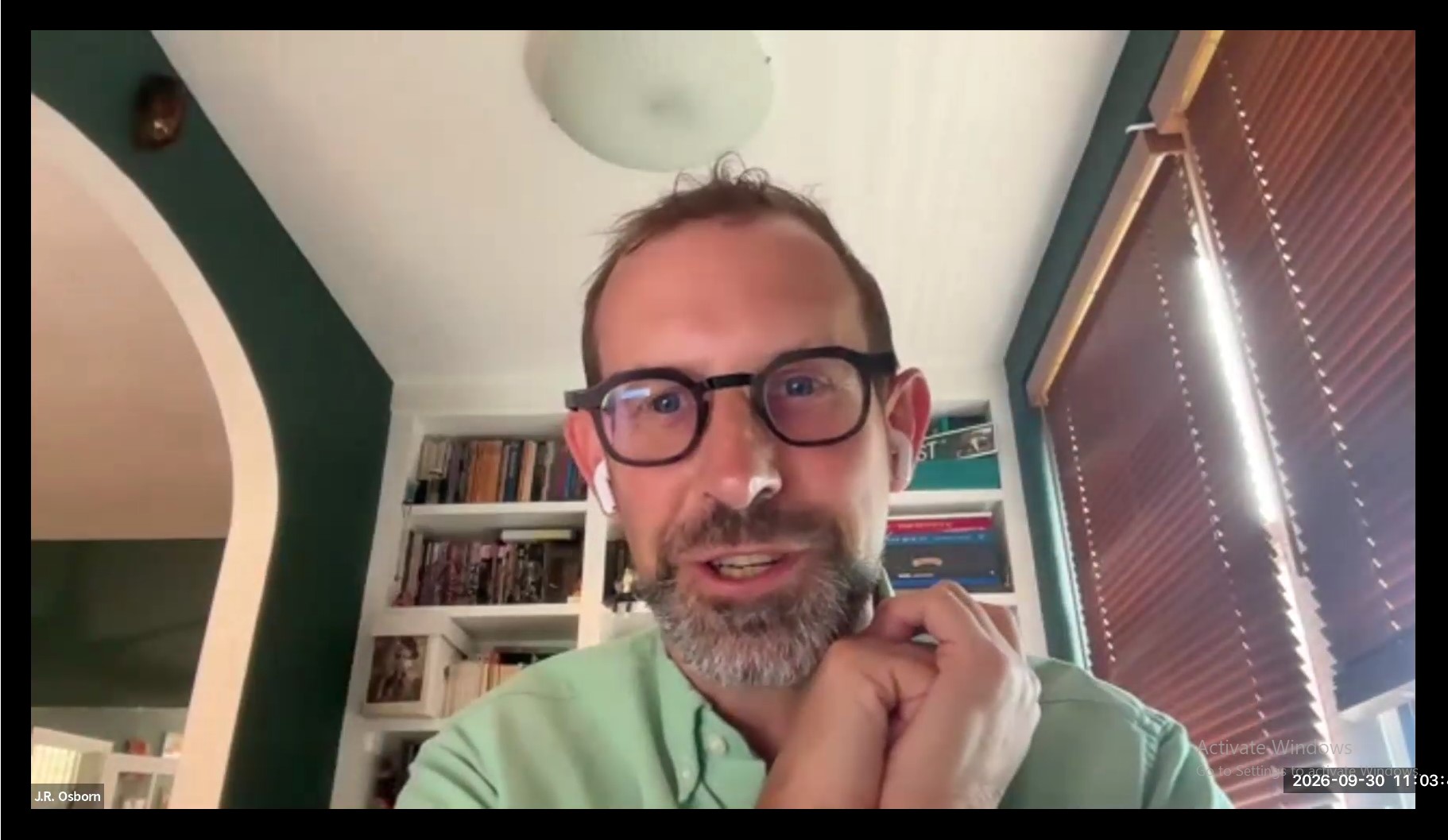
In the second part of the meeting, Dr. J.R. Osborn introduced a proposal for an SMRN panel at the 2027 ACASA Triennial in Rabat, inspired by the work of his mentor Bennetta Jules-Rosette. J.R. introduced Jules-Rosette’s interdisciplinary research across African art, religion, visual culture, semiotics, ethnography, and technology. He focused especially on her understanding of art as a “modeling system” that does more than reflect social and political conditions, but can also preserve and produce forms of historical and cultural knowledge.
The discussion considered how this idea could provide a broad framework for an SMRN panel bringing together different forms of non-textual knowledge. Members drew connections to research on African visual and mathematical systems, dance and performance, cultural heritage, divination, cosmology, technology, and spiritual practices. Participants also discussed possible contributions to the panel and how SMRN’s interdisciplinary approach could create productive connections among these different areas of research.
The meeting concluded with reflections on the value of SMRN as a space for bringing diverse artistic, cultural, technological, and philosophical approaches into conversation, and on the possibilities for extending these conversations through the proposed ACASA panel.
Comments