SMRN’s Third Public Lecture
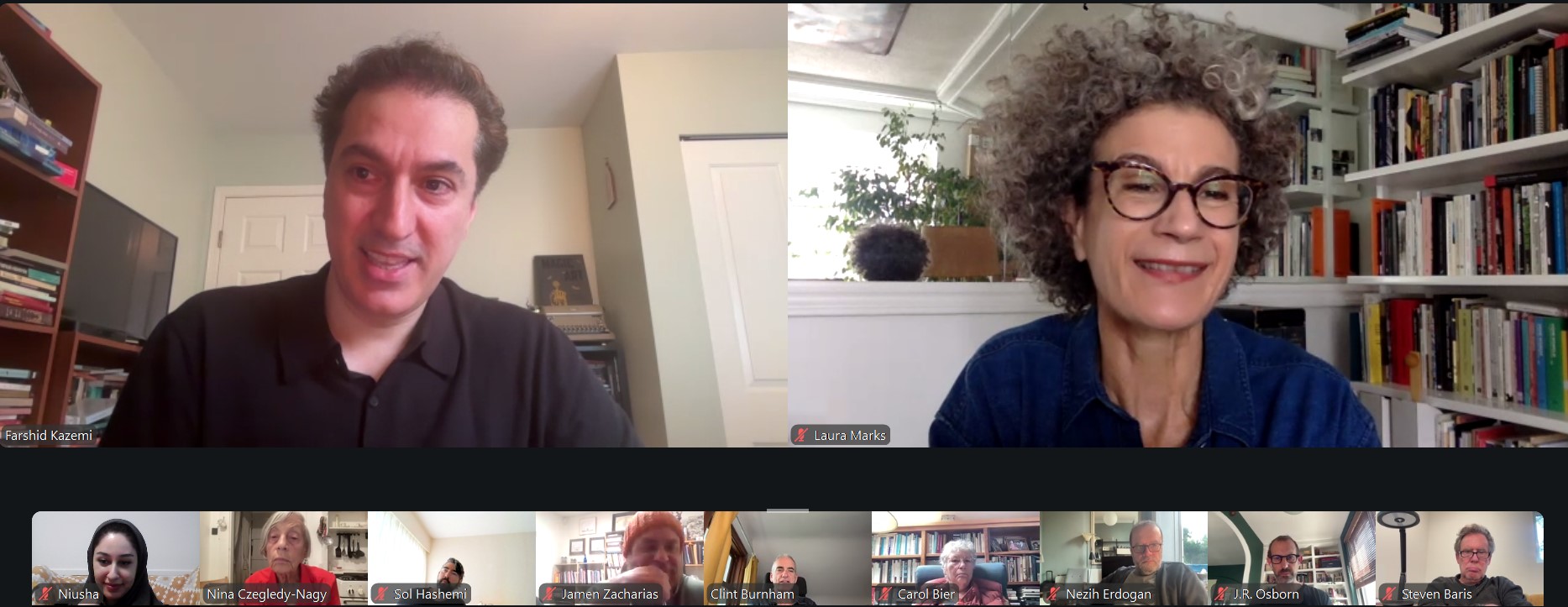
On September 13, 2025, SMRN hosted another event in its public lecture series: the virtual book launch of Iranian Cinema with Psychoanalysis: The Interpreter of Desires by Dr. Farshid Kazemi. The talk was followed by a discussion with Dr. Laura U. Marks and a Q&A session.
Dr. Kazemi presented an engaging overview of his new book, which examines the relationship between Iranian cinema and psychoanalytic theory, focusing in particular on Lacanian ideas. He began by sharing the inspiration behind his work, noting that both Iranian cinema and psychoanalysis are deeply concerned with desire, how it is shaped, repressed, and expressed.
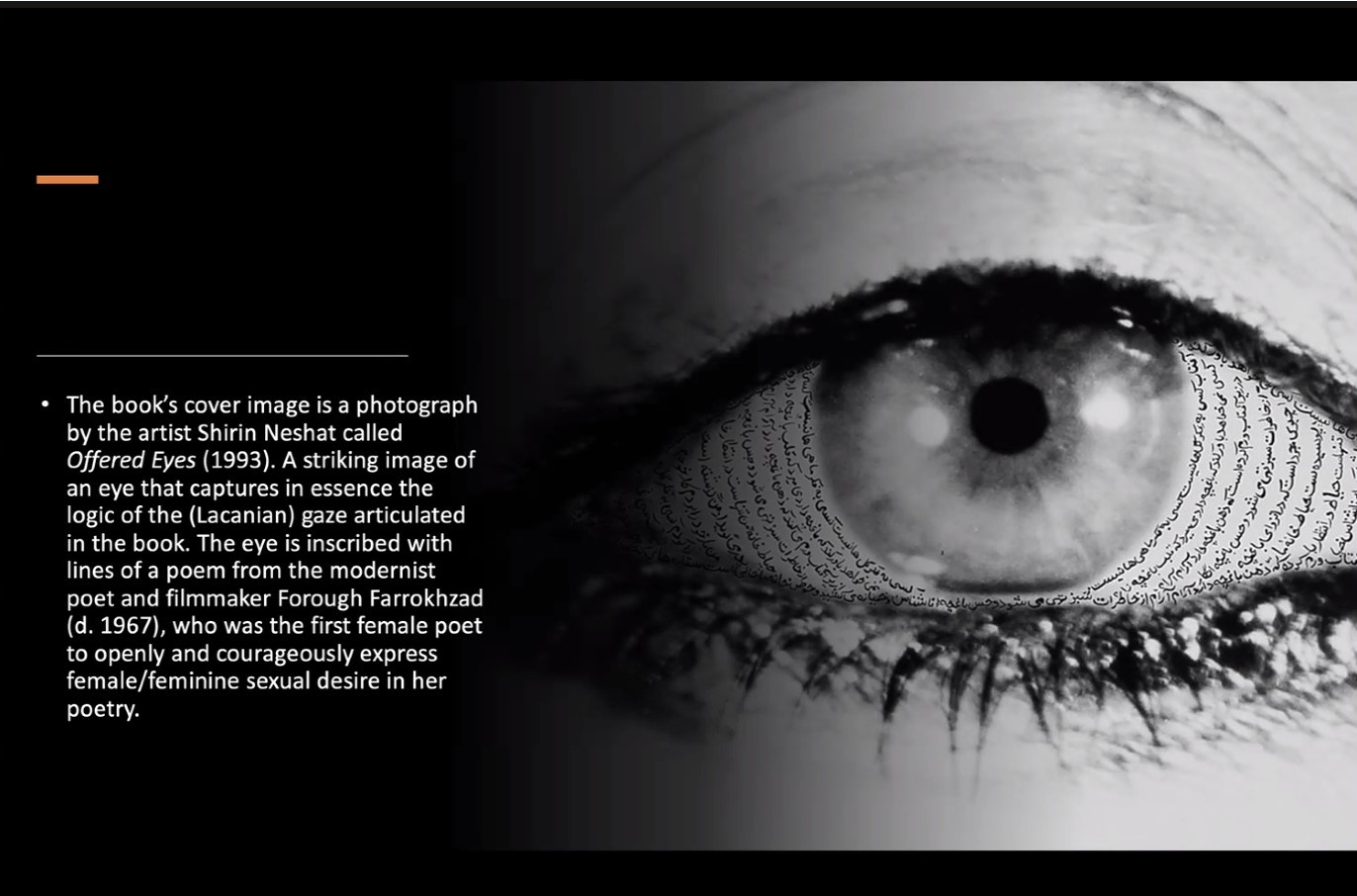
He described how, despite strict cultural and political controls in post-revolutionary Iran, filmmakers have developed creative strategies to convey desire, often through what is left unsaid or unseen. This, he argued, reflects the psychoanalytic notion that desire is defined by absence and lack. He invited the audience to look beyond narrative content to formal elements like cinematography, editing, and mise en scène, where these dynamics are most powerfully articulated.
Dr. Kazemi also traced the historical intersections of cinema and psychoanalysis in Iran, highlighting figures such as Mirza Ebrahim Khan Akkas Bashi and Freydoun Hoveyda. He explained how psychoanalytic theory can be decolonized and applied beyond Eurocentric contexts, introducing the concept of “short-circuiting” (from Žižek and the Ljubljana school), a critical method that brings together seemingly disparate frameworks to generate new insights.
The event concluded with a lively discussion moderated by Dr. Marks, with questions on the compatibility of psychoanalytic and Islamic notions of desire, filmmakers’ intentions, and the broader implications of Kazemi’s research for both film studies and psychoanalytic theory. Overall, the presentation offered a fresh perspective on Iranian cinema and demonstrated the value of interdisciplinary approaches in cultural analysis.
Comments